
Fulbright Student Research Fellowship, Cambodia 2026-27
Field of Study: Research, Photography / Visual Arts
Project Title: My Sisters Sleep in Battambang / បងស្រីរបស់ខ្ញុំគេងនៅបាត់ដំបង
From September 2026-July 2027, I will live in Cambodia for the Fulbright Fellowship. The Fulbright is the U.S. government’s flagship international exchange initiative, a highly competitive fellowship designed to build lasting connections through research, art, education, and cultural diplomacy. Selection is a rigorous process based on academic and professional merit, placing grantees into a historic network that includes dozens of Nobel Laureates and Pulitzer Prize winners.
For my project, My Sisters Sleep in Battambang / បងស្រីរបស់ខ្ញុំគេងនៅបាត់ដំបង, I will interpret and re-contextualize my mother’s unpublished nursing master's thesis, Survival During and After the Khmer Rouge, which documents her survival of the Cambodian genocide. This photographic historical research initiative translates her written testimony into a comprehensive visual narrative, a book, and multimedia installations.
Through these mediums, I will explore her childhood trajectory across Phnom Penh, Battambang, and Moung Ruessei—vibrant landscapes that ultimately witnessed and retained the memories and unmarked graves of the Killing Fields. By combining archaeological survey, landscape and portrait photography, and installation, the project seeks to locate and raise awareness of these mass gravesites, investigate and honor my mother’s past, and address intergenerational trauma within the Cambodian diaspora.
-
ឆ្នាំនេះ ខ្ញុំធ្វើជា Fulbright Fellow នៅប្រទេសកម្ពុជា ៩ ខែ។ Fulbright គីជាកម្មវិធី exchange program របស់អាមេរិច។ គេឲ្យអាហារូបករណ៍និស្សិត សិល្បករ និង professionals ជនជាតិអាមេរិក ដើម្បីធ្វើការ research រៀន ឬបង្រៀន នៅក្នុងប្រទេសមួយផ្សេងទៀត។ រាល់ឆ្នាំមានតែអ្នក research មួយចំនួនតូចប៉ុណ្ណោះដែលត្រូវបានជ្រើសរើសមកកម្ពុជា។ ខ្ញុំនឹងទៅស្រុកមោងឫស្សី ខេត្តបាត់ដំបង ដើម្បីធ្វើ research ហើយបង្កើត Art Project អំពីរឿងរ៉ាវ និងទីតាំងផ្នូររបស់ជនរងគ្រោះក្នុងសម័យខ្មែរក្រហម Project នេះឈ្មោះ បងស្រីរបស់ខ្ញុំគេងនៅបាត់ដំបង ពីព្រោះម៉ាក់ខ្ញុំបានសរសេរសៀវភៅនិយាយអំពីសម័យខ្មែរក្រហម ខ្ញុំចង់គោរព និងរំលឹកដល់សមាជិកគ្រួសាររបស់ខ្ញុំ ដែលបានបាត់បង់ជីវិតនៅទីនោះ។ ខ្ញុំនឹងបង្កើតសៀវភៅរូបថត និងធ្វើ multi-media installations ដែលនឹងបង្ហាញអំពីភាពលំបាកក្នុងការស្វែងរកទីតាំងផ្នូរ ពីព្រោះទីតាំងផ្នូរទាំងនោះគ្មានផ្លាកសញ្ញាសម្គាល់ ហើយស្ទើរតែគ្មានអ្វីបង្ហាញថាជាកន្លែងបញ្ចុះសពនោះឡើយ។ Project របស់ខ្ញុំនឹងមាន historical research, map, រូបទេសភាព , រូបបញ្ឈរ , រូបថតគ្រួសារចាស់ៗរបស់ខ្ញុំ and also exhibiton. Host instiutions របស់ខ្ញុំជា Center for Documentary Photography នៅភ្នំពេញ និងបុស្បា House នៅបាត់ដំបង។
Translation by Sovann Pich.
II. Foreward
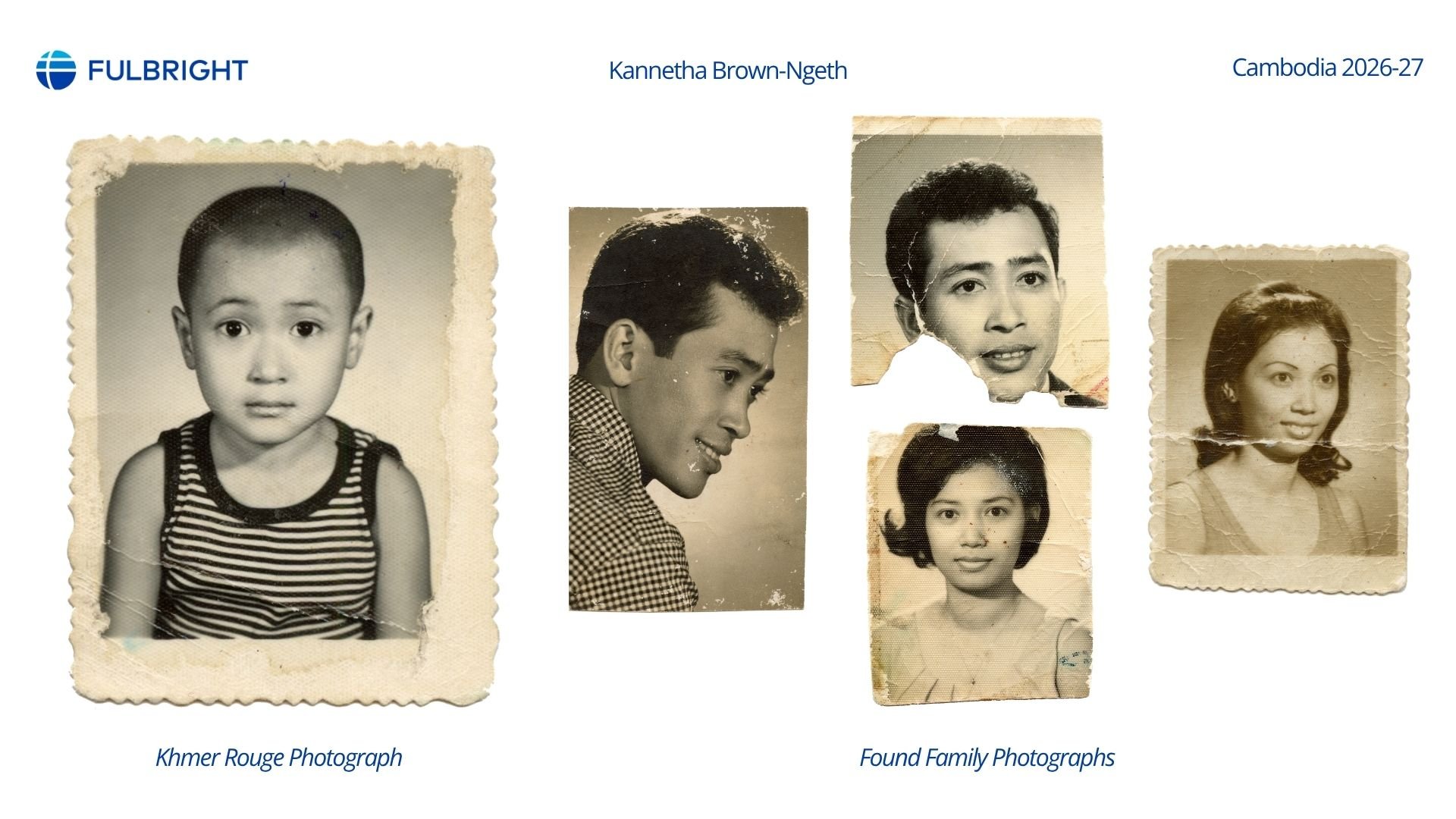
I have always been perplexed by the history of photography in Cambodia because the Khmer Rouge banned and destroyed photographs and other personal objects, causing a severe lack of family photos within our diaspora. During the regime, mass evacuations forced choices about what could be carried, leaving many having to leave their family photographs behind or bury them underground. While photography was forbidden amongst everyday people, Khmer Rouge cadres utilized it in their camps and prisons, documenting their new society as well as people they wanted to interrogate or execute.
In Moung Ruessei, a Khmer Rouge cadre photographed my mother’s younger sister, Avie, who was later executed for her inability to work in the rice fields due to malnutrition. When the regime fell, my mother brought this photo with her to Phnom Penh, where she recovered a handful of photographs of her mother and father amidst the rubble of her childhood home. She then smuggled these surviving photos inside a rice bag across the Thai border to the Khao-I-Dang refugee camp, eventually bringing them with her to the United States.
Because of my interest in the history of the Khmer Rouge genocide, when I was 22 I asked my mother to read her book. She always kept it hidden from my sister and I, telling us to wait until we were older because of its horrific content. Shortly after I finished it, I sat down with her and told her what I learned; that her writing was beautiful, that she went through so much, and that I strongly believed my sister and I are her sisters reincarnate. Shedding a tear, she said, "I didn't know you can think like I do.”
III. Partners
-
Cambodian Center for Documentary Photography (CCDP), Phnom Penh
Lab, Mentorship, Workshops, Networking -
Kim Hak, Thnaal Art Farm, Battambang
Mentorship, Gallery Venue CollaborationRaphael Pech, Canadian International School
Mentorship, Networking
-
Bossbha’s House, Battambang
Artist in Residence Unit, Gallery Venue Collaboration -
Be Like Khmer School, Phnom Penh
Education, Mentorship -
Leica Store and Gallery, Boston
Massachusetts College of Art and Design, Boston
IV. Methods
To build a comprehensive, accessible, visual interpretation of the text, I will employ four artistic research methodologies, culminating in both a published book and a public exhibition.
-
This method maps history and space by using my mother’s thesis as a geographic guide to the urban neighborhoods, schoolhouses, and political sites she and my grandparents inhabited in pre-war Phnom Penh, as well as her labor camp in Moung Ruessei. I will supplement her narrative with archival research at institutions like DC-Cam and the National Archives of Cambodia, cross-referencing her personal account with official records and maps to isolate historic coordinates. The physical execution involves active on-the-ground fieldwork—trekking through rural provinces alongside local guides to locate these spaces while recording oral histories from institutional experts, local elders, and Buddhist monks who serve as the vital keepers of memory within the provinces. -
This method visually records the archaeological journey, using medium format analog, digital, and long-exposure night photography to capture the physical and psychological reality of the terrain. I will utilize environmental photography to capture how nature has reclaimed these historical witness sites, alongside a precise documentary style to record physical routes and landmarks. To translate the underlying history of the fields into a haunting visual poetry, I will integrate a fluid, artistic style featuring close-up, tactile detail shots of the earth and flora, capturing the atmospheric, heavy emotional weight of these witness landscapes.
-
I will photograph my surviving family members in Phnom Penh, as well as the individuals I engage with throughout the research process, including rural villagers, local elders, and monks. Crucially, I will also document my mother, grandmother, and sister during their travel from the United States, capturing a multi-generational return to these landscapes. Through collaborative staged and environmental portraiture, I will work alongside participants within homes or historic sites to honor their agency and show how the past remains a living presence. Central to this phase is experimenting with archival photography, using my family’s salvaged prints as physical tools for storytelling and intimate, site-specific installations in the field. I will extend this experimentation into the darkroom through anthotypes (a plant-based printing technique using emulsions made from local Cambodian flora) to physically bind these historic family images to the organic matter of the land where memory and ecology intersect. -
This final phase translates the research into an immersive physical experience, transforming documents of survival into active sites of honor. In the field, I will execute Spirit Flags, temporarily installing large, semi-transparent mesh banners printed with archival family portraits at unmarked labor camps and burial sites, allowing the terrain to bleed through the images to visually anchor their memory to the soil.The project culminates in a formal gallery exhibition that weaves together the large-scale landscape prints, portraits, and documentary evidence. Rather than presenting static imagery, the physical, field-worn Spirit Flags banners, carrying the literal dust and atmospheric memory of the terrain, will be suspended within the space. This three-dimensional arrangement forces a visceral encounter, bridging the viewer directly with the geographic weight of these witness sites.
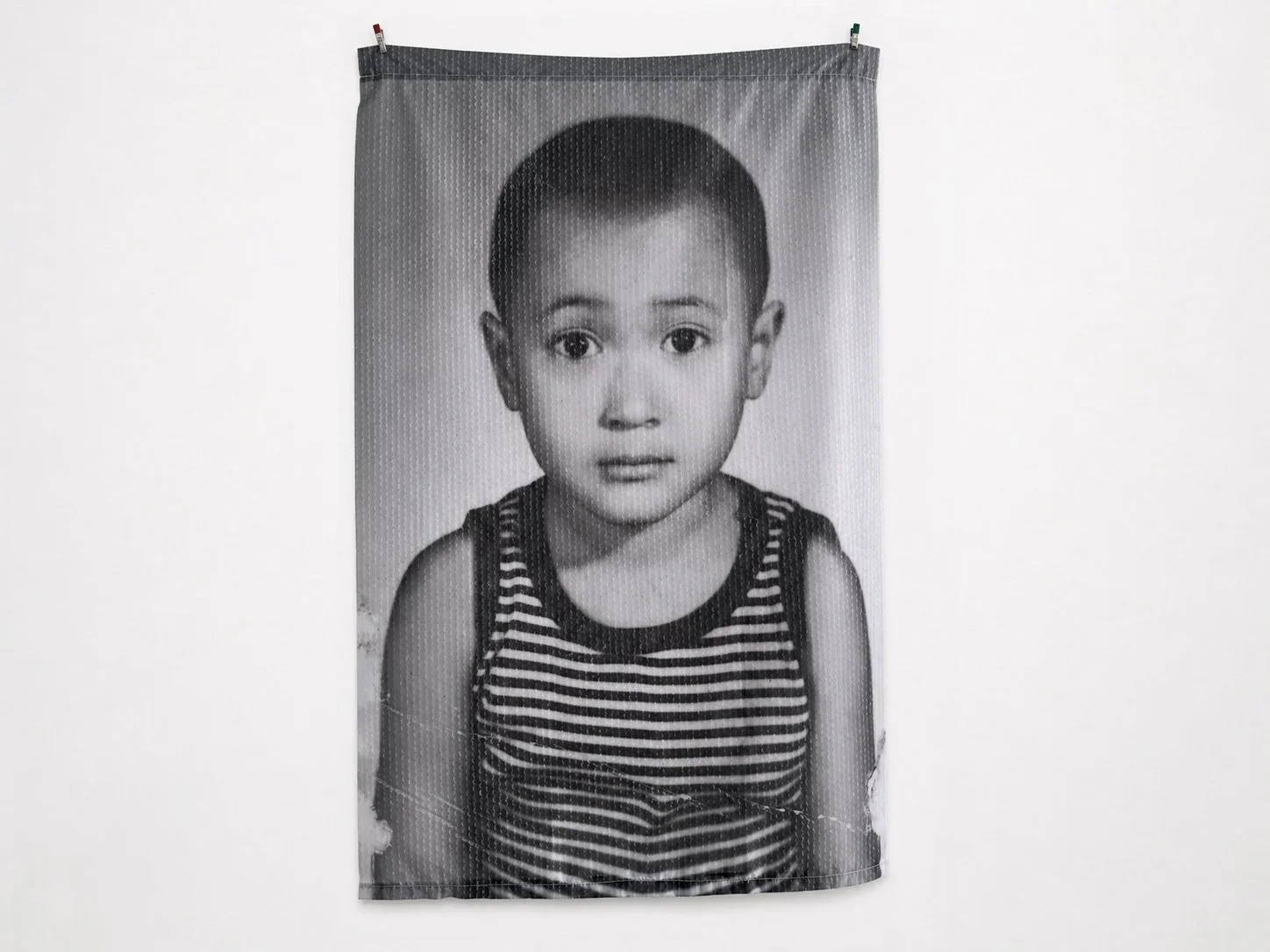
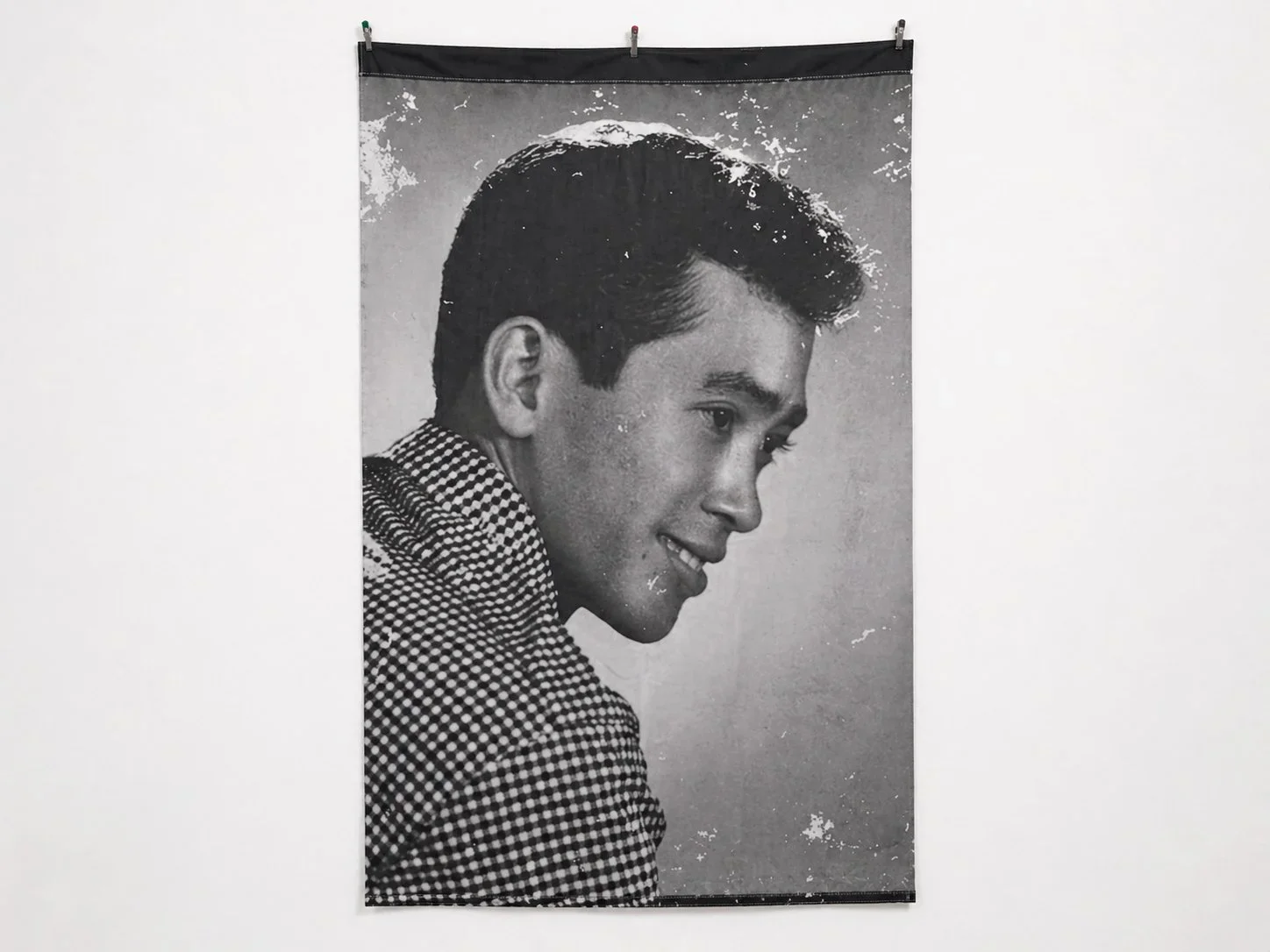
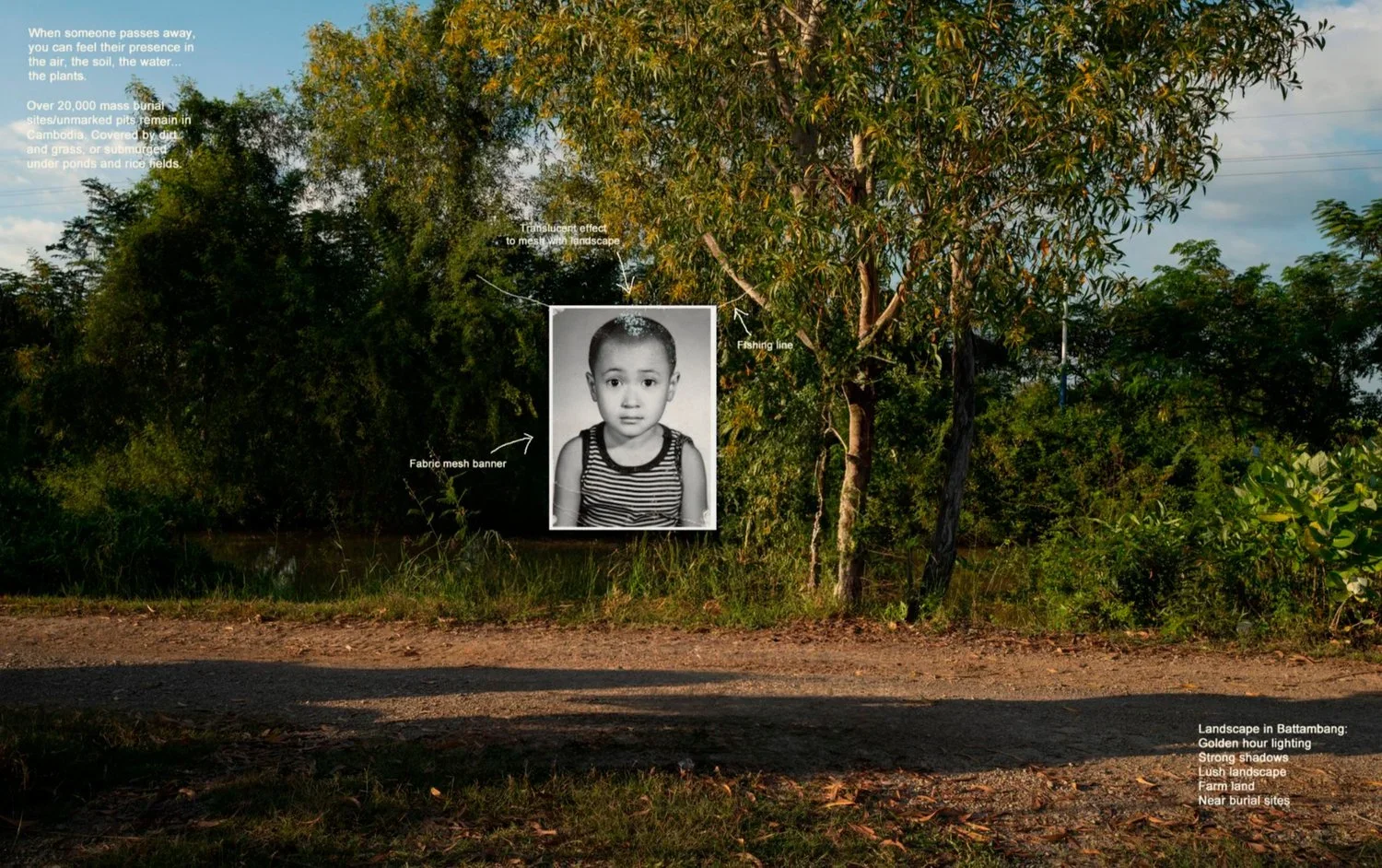
Spirit Flags and installation mockup.
V. Logistical Timeline
-
Field Research I: Residing in Phnom Penh with family allows daily access to central research facilities: the Documentation Center of Cambodia (DC-CAM), S-21 (Tuol Sleng), and Choeung Ek. This phase focuses on the prelude of my mother’s story and the formal historical sites from this era. Here I will learn more about the events leading up to the war and the Khmer Rouge Genocide from experts, and discover more about my grandfather’s past as a Lon Nol politician– serving as the forward of my own interpretation.
-
Field Research II: Relocating to Battambang City, I will be living at Bossbha's house, a community gallery and cafe space, in their artist-in-residence unit. From this hub, I will commute into rural Battambang province and Moung Ruessei with guides for my safety, to conduct field research, interview and learn from village elders and local monks, and begin landscape photography and site-specific "Spirit Flag" installations. I will also confer with Bossbha’s house and Thnaal Art Farm (Kim Haak’s gallery in Battambang province) about potential exhibitions of the work.
-
Public Display:
The final months will be dedicated to exhibiting the work in local exhibition venues and engaging in community conversations about the work. I will also begin sequencing the book layout for My Sisters Sleep in Battambang, and prepare to bring and display the work in the United States. I already have an exhibition venue planned in winter 2027 in my home state.
VI. Ethics and Safety
-
I began Khmer language lessons in November 2025 on scholarship in Cambodia through the Rhode Island Foundation, and have continued lessons on a weekly basis virtually. I am now able to speak conversational Khmer and plan to continue my lessons at Be Like Khmer School while abroad. I also plan to utilize fixers/guides when interviewing survivors regarding sensitive topics that may be difficult for me to communicate accurately in my second language. -
My fieldwork relies on ongoing institutional and local collaboration to contextualize the historical materials behind the project. I plan to compensate all organizations, locals, and monks who participate in my research and project methods through the following: rent, stipends, donations, teaching, volunteer labor, or a meal when money is not accepted. -
Through my affiliates and family, I plan to hire guides/experts when my field work calls for rural expeditions and more advanced Khmer.
VII. Book
The long-term trajectory of this project is a monograph designed as an autonomous extension of the fieldwork. The book will interweave my analog and digital imagery with text fragments from my mother’s archival writings and my own field journals, creating a sparse, lyrical dialogue between maternal memory and a daughter’s search.
I am actively seeking a publishing home for this work and will consult closely with my project affiliates to navigate the international photo book landscape. I will initially design a book dummy to pitch to independent photography presses for global distribution. If external publishing houses are not the right fit, I will collaborate with past publishing partner Zug Press to execute a high-fidelity, limited-edition independent run, maintaining strict control over tonal separation and tactile paper selection.